

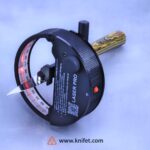
Description
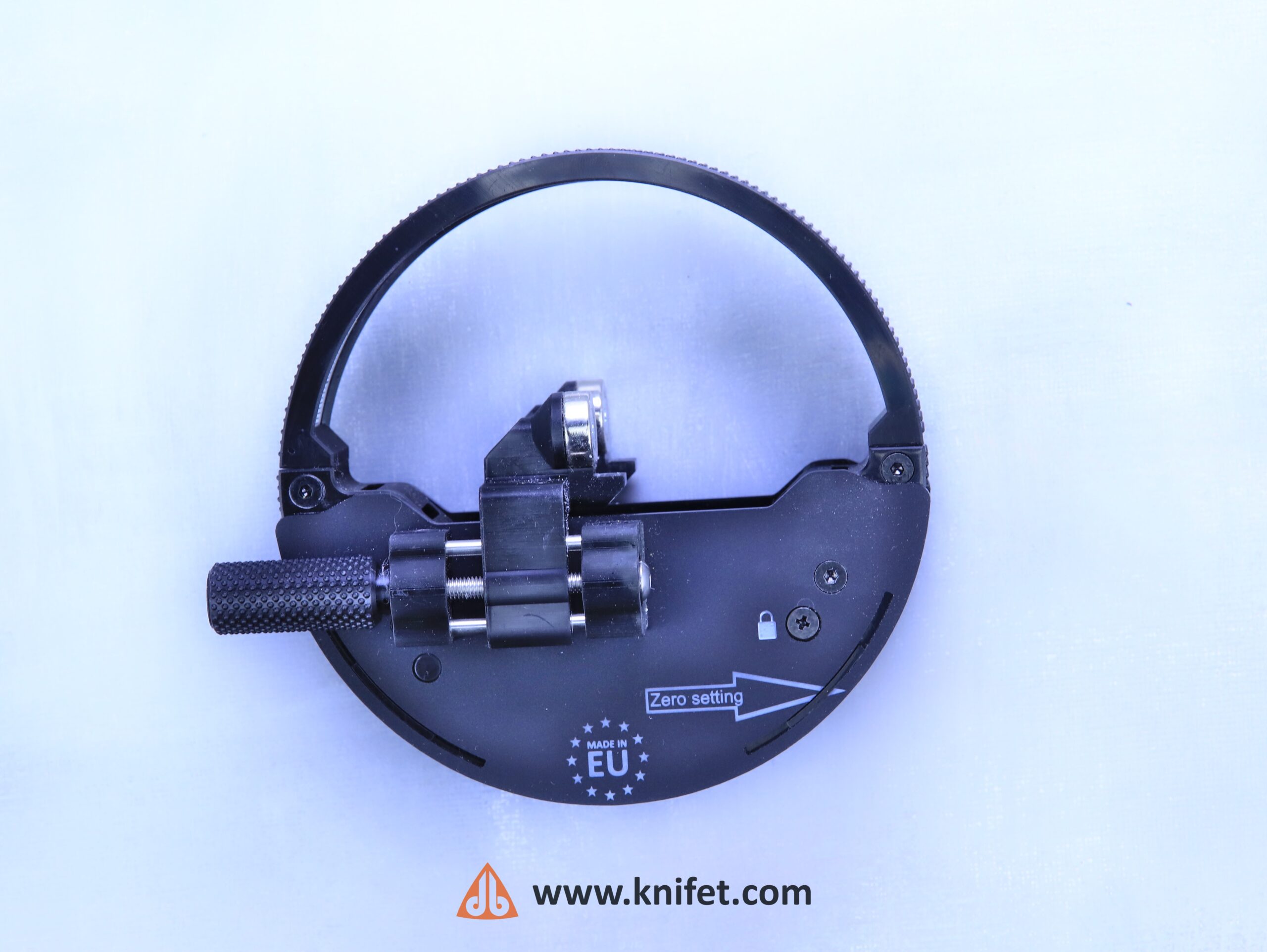
What is a laser goniometer used for?
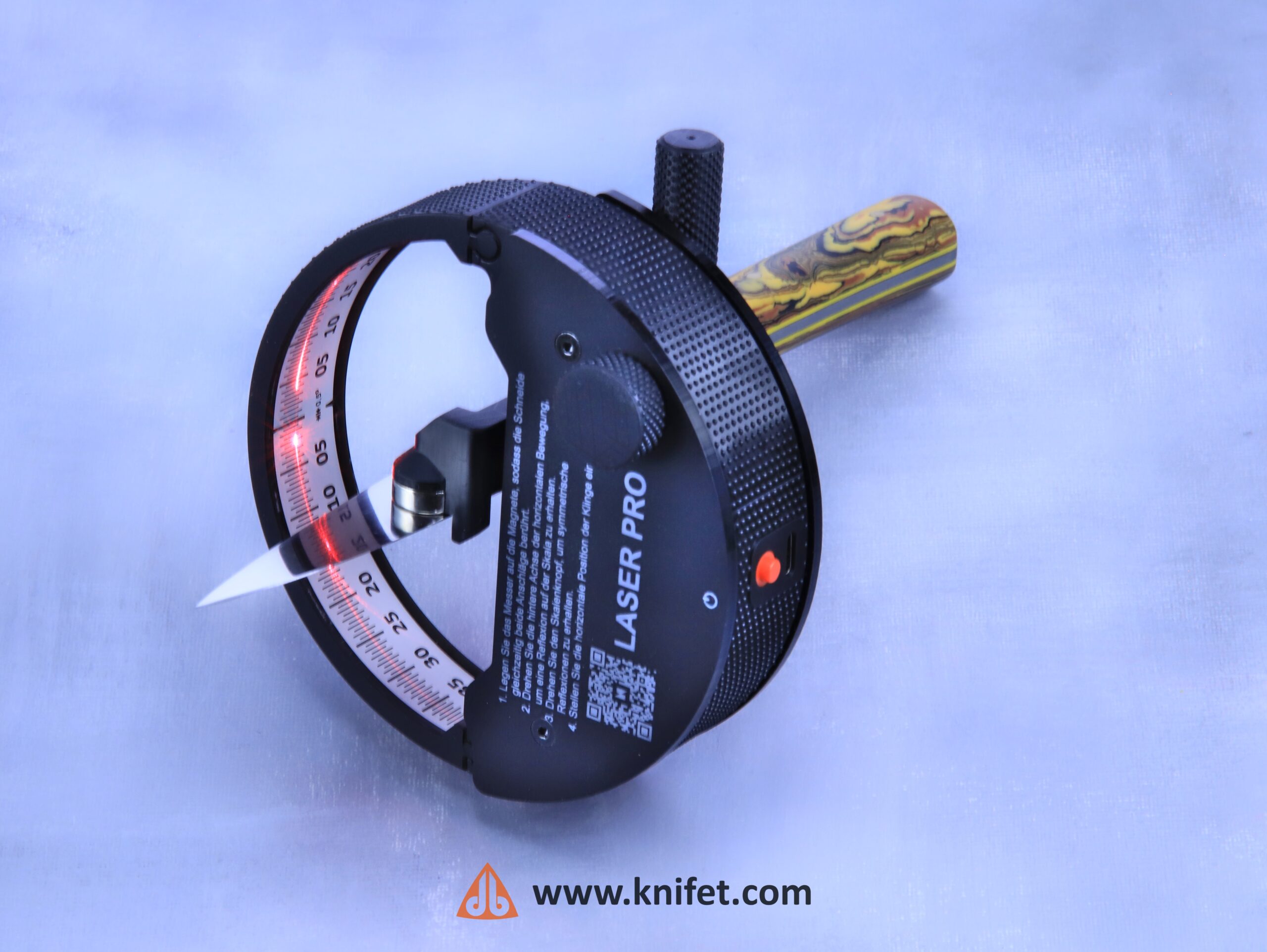
A laser goniometer is a measuring tool that will significantly speed up and improve the quality of knife sharpening. The result of the work will be of higher quality and more accurate.
A laser goniometer is used by both sharpeners when restoring the edge of an already sharpened knife and knife makers when creating a new bevel.
A laser goniometer will accurately measure the angle at which the blade edge is sharpened. The sharpener can thus precisely set the angle at which the sharpening stone is leading. It avoids trial and error in setting the correct angle.
When creating a new bevel, a laser goniometer will allow you to check whether the bevel angle corresponds to the knife maker’s intention. At the same time, it will show the quality of the sharpening, especially the regularity of the bevel. A laser goniometer provides information about the quality of the sharpening work and, as a result, helps the sharpener achieve professional and repeatable results.
Who is the goniometer intended for?
A laser goniometer will be appreciated by knife sharpeners. Before sharpening a knife, the sharpener is faced with the question of whether to respect the existing angle of the bevel or to resharpen the bevel at an angle according to his own discretion or the customer’s wishes. When resharpening at a different angle, more material is necessarily removed and the knife “ages” faster than when respecting the same angle.
The traditional method of determining the existing sharpening angle consists of coloring the bevel with ink and experimentally adjusting the sharpening angle. It is lengthy and inaccurate. A laser goniometer will measure the bevel angle much faster and more accurately.
A laser goniometer is also an invaluable tool for knife makers when creating a new bevel. It simply measures the angle of the sharpened bevel and shows whether the result corresponds to the original intention. Thanks to the goniometer, the knife maker can determine how flat the created bevel is, i.e. to what extent the set angle was maintained during sharpening. The result will be a perfectly sharpened knife, exactly what every customer expects.
The laser goniometer will also be appreciated by knife collectors, hunters, chefs, in short, everyone for whom a well-sharpened knife is a necessity.
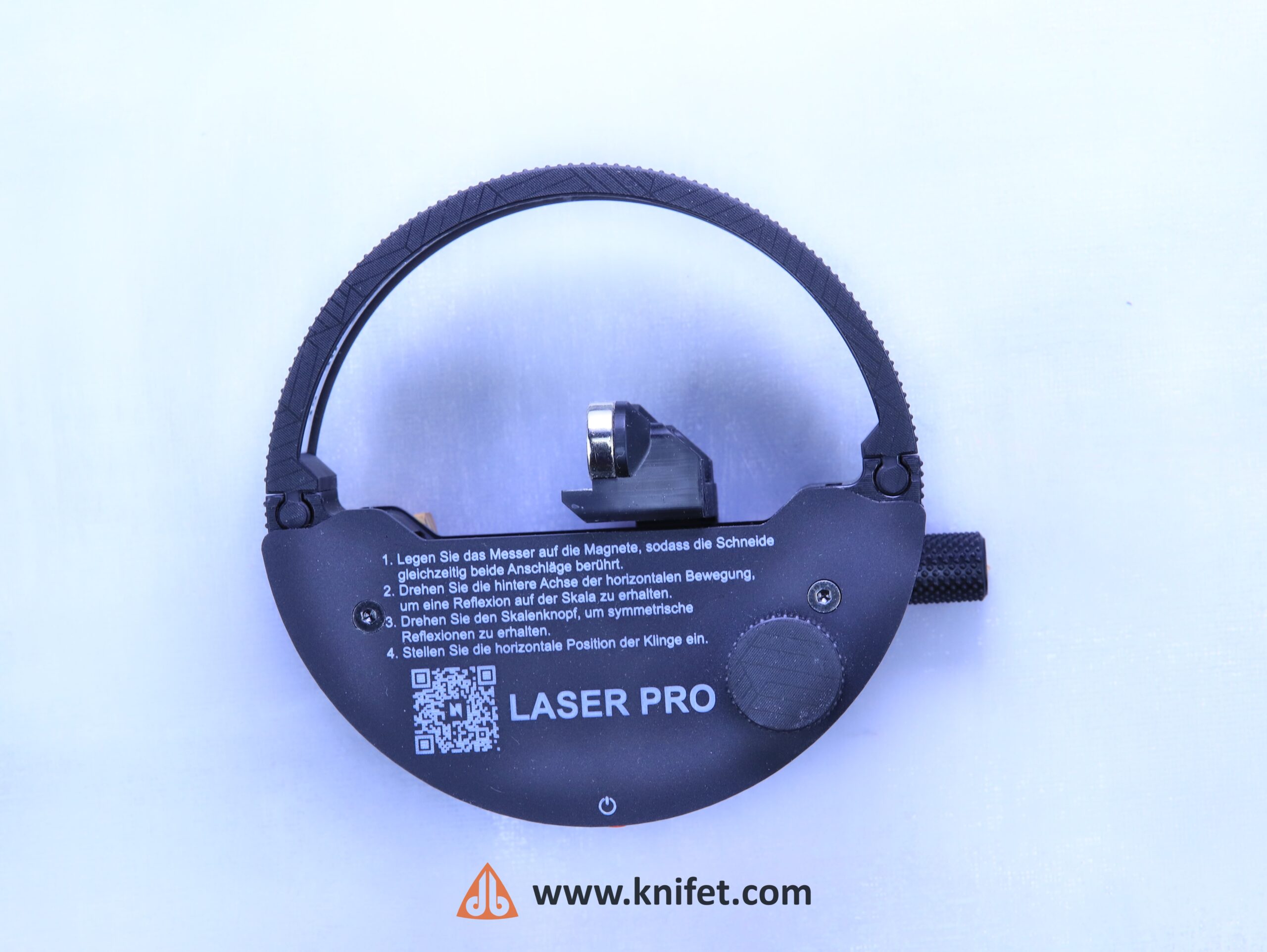
How does it work?
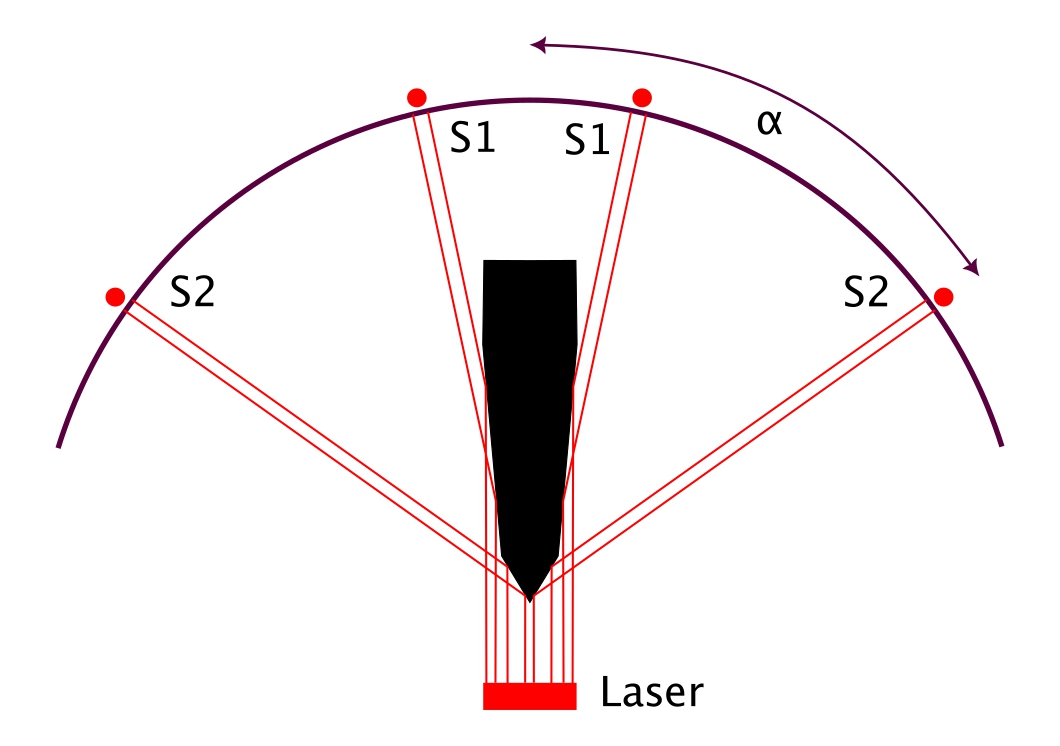
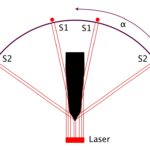
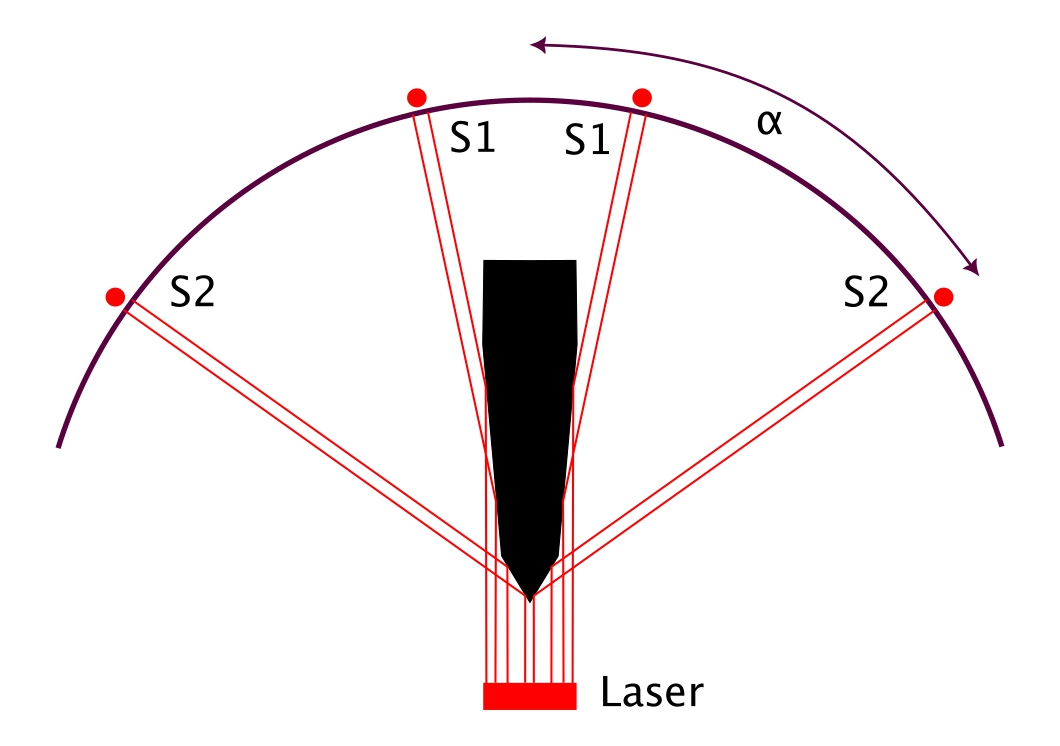
The laser beams are aimed from below at the blade and are reflected onto a screen with an angle scale. They create four traces, two on the right and two on the left side of the blade. The two more distant traces S2 are reflections of the rays from the bevel, the two closer S1 enter by reflection on the surface of the cut.
The stop S1 is used to center the blade in the goniometer, the bevel angle α is then read off the screen scale according to the position of the stops S2.
In the ideal case, when the cut and the bevel are perfectly straight, the traces of the laser beam on the screen have the form of dots or narrow stripes. The more the cut and the bevel differ from the ideal, the less sharp the laser trace is.
In addition to measuring the grinding angle, the laser goniometer will show how flat the bevel grinding is, i.e. how good the quality is.
In the case of bevel grinding on a disc grinder, e.g. Tormek, the bevel has the shape of a cylindrical surface. In this case, the beam trace on the screen is wider, but again should be sharply defined.
Controls and measurement procedure
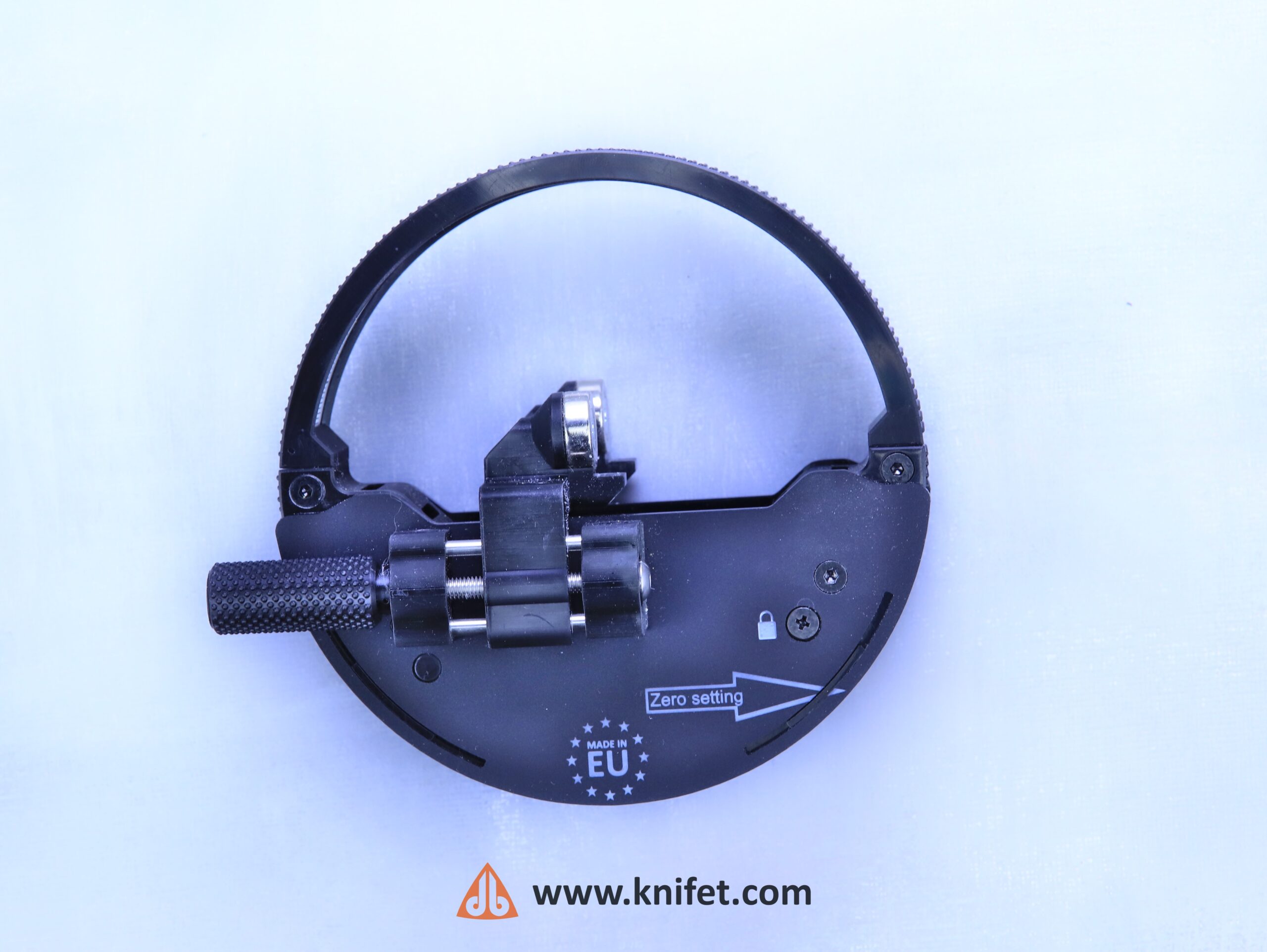
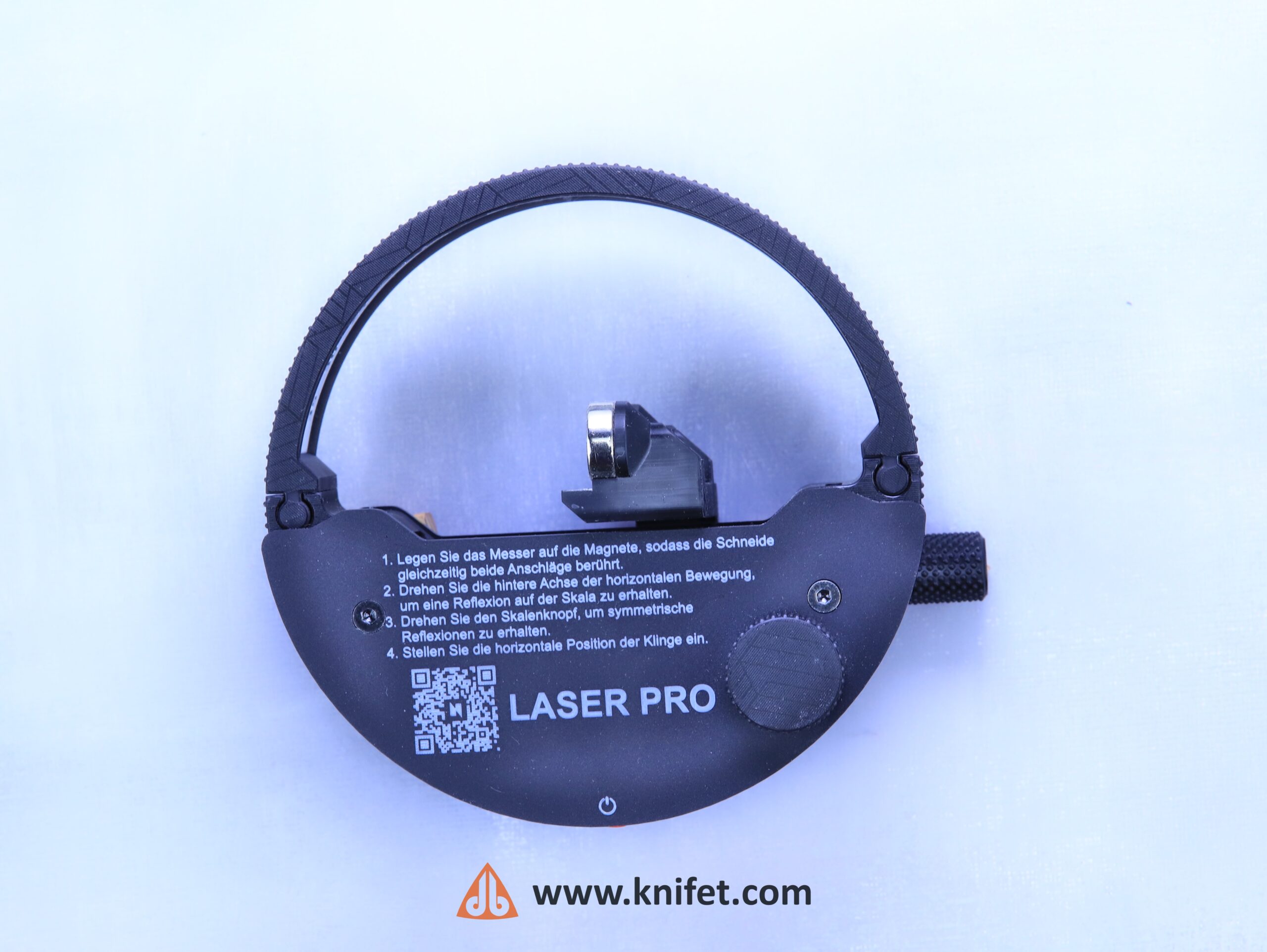
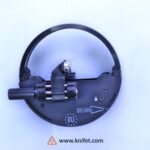
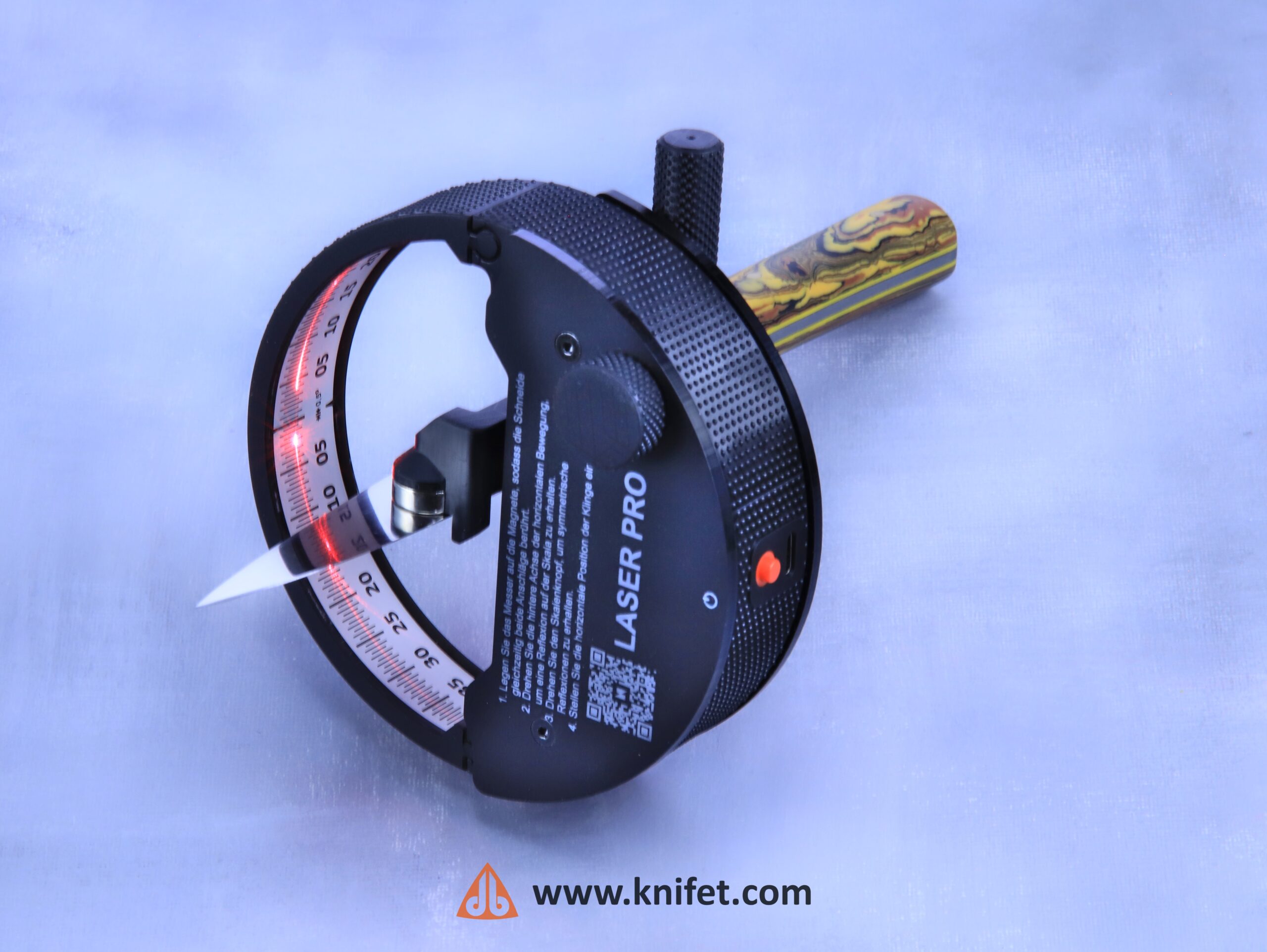
We insert the knife into the goniometer with the blade down and fix it with two neodymium magnets. Using the adjusting screw 1, we move the knife to the center of the laser beam so that the traces of the beam S1 on the screen are equally intense. Then, using the adjusting screw 2, we compensate for the tilt of the blade caused by grinding so that O on the screen scale is in the middle between the traces S1. The traces S2 then show the angle of grinding of the bevel on one and the other side of the blade. If the readings on the scale are the same, the bevel is symmetrical. If each trace S2 shows a different value, then the bevel is asymmetrical. The entire measurement is very fast, it only takes a few seconds.
Additional information
| Measurement range | Up to 74° total |
|---|---|
| Measurement accuracy | 0,5° |
| Power supply | integrated Li-ion battery |
| Recharging the battery | USB cable, 5V adapter (not included) |
| Blade attachment method | 2 neodymium magnets |
| Maximum blade height | 50 mm |
| Optional accessories | Interchangeable scale for higher blades |